
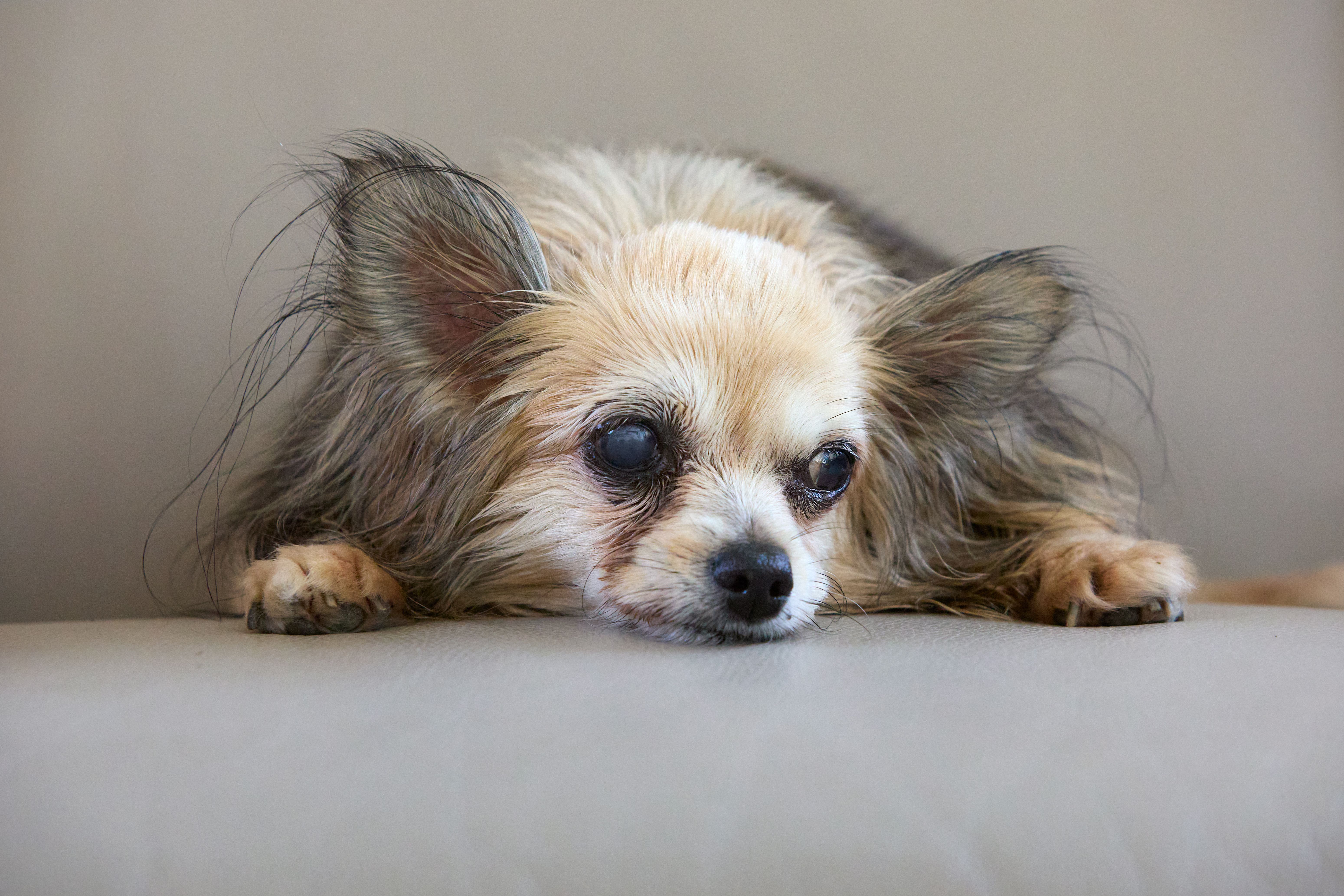
Some slowing down is a normal part of aging, but limping, stiffness, or reluctance to jump, climb stairs, or rise from lying down often points to osteoarthritis or another orthopedic issue. Sudden lameness or a dog that will not bear weight on a leg should be evaluated promptly rather than watched.
Some change in pace is expected as dogs age. A senior dog may take a little longer to get going in the morning or prefer a shorter walk than they did a few years ago. That said, slowing down and struggling are not the same thing.
A dog that hesitates before jumping into the car, avoids stairs, or seems stiff after resting is usually telling you something more specific than general aging. Mobility changes are common in senior dogs, but they are also one of the most treatable quality of life issues a dog can face.
Several conditions can affect a senior dog's ability to move comfortably.
The most common cause of joint pain in older dogs. Cartilage wears down over time, leading to inflammation, stiffness, and discomfort, most often in the hips, knees, elbows, and spine.
Similar to an ACL injury in people. This ligament can weaken gradually or tear suddenly, causing noticeable lameness in a rear leg. It is one of the most common orthopedic surgical conditions in dogs.
Dogs with hip dysplasia earlier in life often see the condition progress into arthritis as they age, even if they showed few symptoms when younger.
Changes in the spine can compress nerves and affect a dog's back legs, coordination, or willingness to move. This can range from mild discomfort to a more urgent neurologic concern.
Dogs are skilled at masking pain, so watch for behavior changes rather than waiting for obvious limping.
A veterinary exam typically starts with watching your dog walk and evaluating each joint by hand for pain, swelling, or reduced range of motion. From there, X-rays are usually recommended to assess joint spacing, bone changes, and any signs of injury.
For dogs with neurologic signs, such as weakness, dragging a paw, or loss of coordination, additional imaging like a CT or MRI may be needed to look at the spine directly.
Most arthritis and general stiffness is well managed by your primary care veterinarian through a long-term pain management plan. A few situations point toward a surgical specialist sooner rather than later.
Treatment depends on the underlying cause and how much it is affecting daily life. Options range from conservative management to surgery.
Not every joint condition requires surgery. A thorough diagnosis helps determine which path gives a dog the best long-term comfort and function.
Your primary care veterinarian is the right starting point for ongoing arthritis management and general mobility concerns. When a dog has a suspected cruciate ligament tear, a more complex orthopedic injury, or a neurologic issue affecting the spine, our board-certified Surgery specialists at Oklahoma Veterinary Specialists can work alongside your primary veterinarian to provide advanced diagnostics and surgical treatment options.
We are also a 24/7/365 emergency hospital, so we are available if your dog suddenly cannot bear weight, becomes weak in the back legs, or loses the ability to stand. No appointment is needed for emergency concerns.
Have questions about a mobility or joint change in your senior dog? Call Oklahoma Veterinary Specialists at 918-299-4900 or visit okvets.com to learn more about our Surgery team.
Oklahoma Veterinary Specialists delivers 24-hour emergency care and board-certified specialty services with advanced technology and compassionate treatment.


